Apple has staged a massive comeback, stopping Android…for now

In the past three months, Nielsen says, Apple has grabbed a 43% share of the smartphones sold in the U.S.

Android’s share has increased versus a year ago–it still leads the market with 48%–but Android’s share gains appear to have stalled.

Apple’s gains are the result of a few key factors, all of which demonstrate that Apple learned a searing lesson from its failure in the 1990s PC market:

  • In the U.S., Apple has finally broadened distribution of the iPhone to Verizon and Sprint, instead of just selling through AT&T.
  • Apple introduced a “low-price” version of the iPhone.
  • Broadened its distribution channels to major retailers like Walmart, Amazon, and Best Buy.
  • Dominating the global tablet market.

via Business Insider


Thx to Nicholas Carson

Why doesn’t brainstorming work?

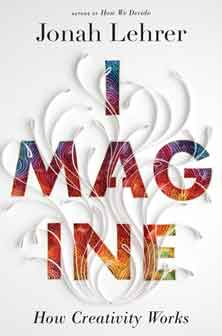
From an interview with Jonah Lehrer, author of Imagine: How Creativity Works.

Why doesn’t brainstorming work? What should we do instead?

I think the failure of brainstorming is inseparable from its allure, which is that it makes us feel good about ourselves. A group of people are put together in a room and told to free-associate, with no criticism allowed. (The assumption is that the imagination is meek and shy — if it’s worried about being criticized, it will clam up.) Before long, the whiteboard is filled with ideas. Everybody has contributed; nobody has been criticized. Alas, the evidence suggests that the overwhelming majority of these free-associations are superficial and that most brainstorming sessions actually inhibit the productivity of the group. We become less than the sum of our parts.

However, in recent years, scientists have shown that group collaborations benefit from debate and dissent; it is the human friction that makes the sparks. (There’s a reason why Steve Jobs always insisted that new ideas required “brutal honesty.”) In fact, some studies suggest that encouraging debate and dissent can lead to a 40% increase in useful new ideas from the group.

You talk a lot about the benefits of cultural mixing. What legislative changes would encourage more of this?

More immigrants! The numbers speak for themselves. According to the latest figures from the U.S. Patent Office, immigrants invent patents at double the rate of non-immigrants, which is why a 1% increase in immigrants with college degrees leads to a 15% rise in patent production. (In recent years, immigrant inventors have contributed to more than a quarter of all U.S. global patent applications.) These new citizens also start companies at an accelerated pace, co-founding 52% of Silicon Valley firms since 1995.

Many of the anecdotes in Imagine have a disconcerting common theme of drugs or mental illness. Are creative people all doomed to be addicts or mad men?

I don’t think so. (Yo Yo Ma, for instance, is a very nice guy.) But I do think the prevalence of such stories reminds us that creativity is damn difficult, which is why those in the creativity business are always looking for every possible edge. That’s why many great writers experimented with amphetamines and why performers have always searched for compounds that let them get out of their head, silencing that voice that kills their spontaneity. In the end, of course, these chemical shortcuts rarely work out — there’s nothing creative about addiction. And that’s why I remained convinced that the best creativity booster is self-knowledge. Once we know how the imagination works, we can make it work better.

More Q&A at Mashable


Thx to Jesse Newhart

Myth = 100% of our energy cannot come form renewable sources

100% of Minnesota’s electricity generation needs can be met by wind and solar sources combined with improvements to the state’s electric grid system and energy efficiency policies, according to a report released today.

Renewable Minnesota: Aanalysis of a 100% renewable-energy based electricity system for Minnesota

Researched and written by Dr. Arjun Makhijani and Christina Mills of the Institute for Energy and Environmental Research (IEER) and Dr. M.V. Ramana of Princeton University.

Minnesota’s electricity sector currently accounts for over one third of the state’s greenhouse gas emissions. State policy is to reduce emissions by 80% by 2050.

“A significant change in electricity generation sources is clearly needed to achieve that goal,” Dr. Makhijani explained. “Fortunately, wind and solar can provide 100% of Minnesota’s electricity. These currently available technologies also offer significant job creation and economic development opportunities.”


From Energy Self-Reliant States:

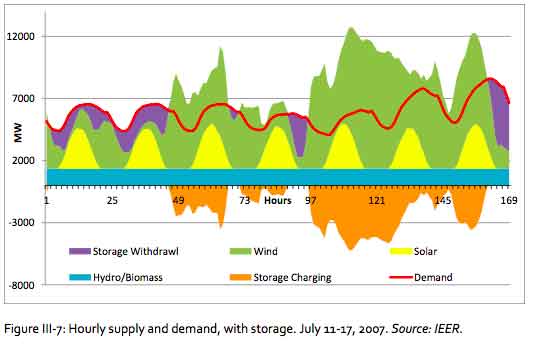
The notion that solar and wind energy cannot be the mainstay of an electricity generation system because they are intermittent is incorrect…it is technically and economically feasible to meet the entire 2007 electricity demand of Xcel Energy [in Minnesota] using only renewable energy generation combined with storage technology and energy efficiency improvements.

The renewable energy mix would include approximately 13,000 megawatts of wind power and 4,600 megawatts of distributed solar PV…would pump more than $90 billion into the state’s economy and create 50,000 jobs.

With the combination of new renewable energy and significant energy efficiency, electricity rates rise slightly but Minnesota ratepayers are held relatively harmless.

The conventional notion of a “peak load” needs to be replaced in designing an electricity system with a high proportion of solar and wind energy…The crunch time may be during periods when the wind and solar supply are low relative to demand.


Thx to Don Burke

Nerdist Channel – you have to have an excessive knowledge of nerd culture

This is one of the most entertaining press conferences I’ve ever seen.

“You have to have an excessive knowledge of nerd culture, a little bit of desperation, and I believe there is an element of being socially ostracized.”


The Nerdist Channel


Featured shows:

  • Ain’t It Cool with Harry Knowles – the TV version of the website you know and love-or-hate-or-both
  • Chris Hardwick’s All Star Bowling
  • Comic Book Club Live
  • Cute Things Exploding – which is self-explanatory
  • Face to Face with Weird Al Yankovic – an interview show with hard-hitting journalist Weird Al Yankovic asking questions and getting answers
  • Kids in the Hall – classic sketches with interviews and anecdotes from the legendary team.
  • Puppet for President – Jim Henson puppet’s speeches, interviews, and searing commentary on the toughest issues of the day
  • Weird S#!t from Japan –  which is about weird sh*t from Japan.

via Nerdist.com

Kickstarter project: build a NYC park in an abandoned, underground trolley terminal

We want to transform an abandoned trolley terminal on the Lower East Side of Manhattan into the world’s first underground park, called Lowline.

This space is quite large, by New York standards: 60,000 square feet, or 1.5 acres. It was built in 1903 as a trolley terminal, for streetcars traveling over the Williamsburg Bridge, and has been out of operation since 1948. We fell in love with the site because of its architectural details: old cobblestones, crisscrossing rail tracks, vaulted 20-foot ceilings, and strong steel columns.

To build this park, we’re planning to use a cutting-edge version of existing technology– which we’ve already built in prototype. It uses a system of optics to gather sunlight, concentrate it, and reflect it below ground, where it is dispersed by a solar distributor dish embedded in the ceiling. The light irrigated underground will carry the necessary wavelengths to support photosynthesis– meaning we can grow plants, trees, and grasses underground. The cables block harmful UV rays that cause sunburn, so you can leave the SPF-45 at home. Sunglasses optional (for cool kids).

We think a year-round public space will be valuable for everyone. Farmers markets and vendor stands can feature fresh produce and locally made goods, supporting local and sustainable businesses. Art installations, concerts, and performances can help showcase the incredible creative spirit of the Lower East Side. Youth programming and educational opportunities can offer rich experiences for kids and parents. And a safe haven from the hectic feel of Delancey Street will serve as relief in a very car-centric corner of Manhattan.

When it’s really cold, or pouring rain, how much fun is it to hang out in Central Park? The High Line? Not so much. The LowLine can be the 21st century answer to traditional parks: instead of building up, let’s build down!

via Kickstarter

Tickets available for the 2012 Newport Beach Film Festival

This will be my second year attending the Newport Beach Film Festival. Last year I watched a film about sharks and listened to Aaron Sorkin speak about writing. I loved it.

This year is looking to be just as good and I’m excited to see movies about the ocean, surfing, design, and drama.

One things that makes this film festival special is its focus on specialized topics, like:

  • Action Sports (surfing, skiing, extreme)
  • Art, Architecture, & Design (documentaries, profiles)
  • Music (profiles of great musicians and genres)

The festival runs from April 26 – May 3 and this year highlights the Island Cinema, a remodeled luxury theater at Fashion Island.

The full schedule is available online at Festival Genius, and you can follow the festival on Twitter – @nbff.

Debate over oil subsidies – Senators voting to protect them received on average 4x more contributions

The debate goes much deeper than who received money, but these numbers are still important:

In a 51-47 vote, 43 Senate Republicans and four Democrats filibustered to protect $24 billion in tax breaks for Big Oil. Although a majority voted for Sen. Robert Menendez’s (D-NJ) bill, it fell short of the 60 needed. The only two Republicans to break rank were Sen. Susan Collins (R-ME) and retiring Sen. Olympia Snowe (R-ME).

A Think Progress Green analysis shows:

  • The 47 senators voting against the bill have received $23,582,500 in career contributions from oil and gas. The 51 senators voting to repeal oil tax breaks have received $5,873,600.

Democrats who joined the Republicans in defeating the bill include Sens. Mary Landrieu (D-LA), Ben Nelson (D-NE), Mark Begich (D-AK), and Jim Webb (D-VA).

The oil industry also spent over $146,000,000 on lobbying last year.

55 percent of Americans want to see the subsidies stopped.

via Think Progress Green


Thx to Justin Bacon

Now is the easiest time since Prohibition to start a distillery

In our inaugural film, we visit the Breuckelen Distilling Company, the first gin distiller in Brooklyn since prohibition. Founder Brad Estabrooke talks about starting from nothing and the imperfect process of perfecting a craft.

“It was challenging to get people to take me seriously. ‘Hey, I just got laid-off from my job and I have a little bit of money. I want to start a distillery.”


DIRECTED AND PRODUCED BY – Keith “keef” Ehrlich

DIRECTOR OF PHOTOGRAPHY – Joshua Kraszewski

EDITOR – Matt Shapiro

TITLE DESIGN – Mandy Brown

MUSIC – Roman Zeitlin

SOUND RECORDIST – Robert Albrecht

RE-RECORDING MIXER – Nicholas Montgomery

SPECIAL THANK – Brad Estabrooke, Breuckelen Distilling Co.


Made by Hand – films to promote that which is made locally, sustainably, and with a love for craft.

The Happiness Advantage, Principle #7: Social Investment

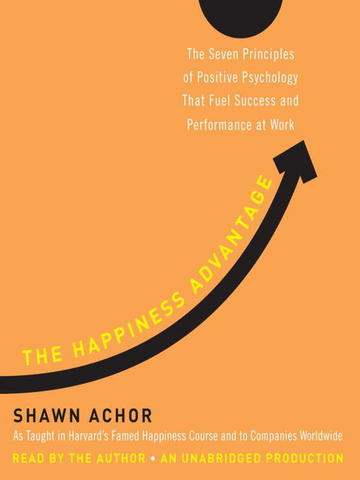
Several years ago, I read about a psychology course being taught at Harvard, “Positive Psychology,” which became the most popular course at the university. The Head Teaching Fellow for the class, Shawn Achor, went on to write and publish, “The Happiness Advantage: The Seven Principles of Positive Psychology That Fuel Success and Performance at Work.”

A fascinating, well-researched and convincing read, what I found most compelling about The Happiness Advantage was Principle #7: Social Investment. With it, Achor highlights the study, “Very Happy People,” in which researchers sought out the characteristics of the happiest 10 percent among us. Of all the factors considered, including wealth, warmth of climate, and physical fitness, only one characteristic distinguished the happiest 10 percent from everybody else: strength of social relationships.

Achor buoyed the argument with his own research:

My empirical study of well-being among 1,600 Harvard undergraduates found a similar result—social support was a far greater predictor of happiness than any other factor, more than GPA, family income, SAT scores, age, gender, or race. In fact, the correlation between social support and happiness was 0.7. This may not sound like a big number, but for researchers it’s huge—most psychology findings are considered significant when they hit 0.3.

He then goes to explain one of the key mistakes people make that utterly disembowels of our central happiness. During times of challenge and stress, people will retreat into themselves, producing an emotional retraction. Perhaps it’s the perceived stigma of showing fear, of feeling shame, that causes us to divest from our social network. But in doing so, we only isolate ourselves, lose perspective, and most importantly, lose the benefit of having a support network in the first place.

After all, what’s the point of having social capital if we can’t tap into it when we need it most?

I recently experienced this phenomenon while going through some major life changes and relationship issues. I kept retreating, putting on a happy face while hiding the fact that I was dealing with some pretty heady stuff, and in the process, only made the situation worse. Finally, I hit a wall. I realized I couldn’t continue repressing and be happy.

So I finally opened up to a few trusted friends and family members. I even talked to a therapist. And to my own stubborn, arrogant surprise, it worked, as if my soul let out an exasperated sigh of relief.

As Achor warns in The Happiness Advantage, even though basic instincts might compel us to turn inward, positive psychology knows better. It can prove the difference between our ultimate success and failure.

Google Street Roo – exploring the outback one bounce at a time

One of our top requests from our users is the ability to roam the vast Australian continent. Unfortunately, the remoteness of the outback has posed a challenge for our traditional Street View cars and trikes.

Today, we’re happy to announce that Google has found an innovative way to capture a special collection of images from the back of beyond to include in Google Street View.

Over the next four weeks, more than a thousand Big Red kangaroos will be equipped with a 360-degree head camera that will automatically capture images when the marsupial is on the move during daylight hours.

The cameras on our Street Roo collection team will be powered by solar panels stitched into the back pocket of custom-made roo jackets. Images will be wired to Google in real-time. A GPS tracker embedded into the jacket will match the location of the kangaroo to ensure the image is accurately uploaded onto the new Street View layer.


Keep reading – Official Google Australia Blog