Just a few shots of the spacecraft, no aliens here. You will have to click the link to io9, but warning major spoiler alert.


// Thx – Tara Tiger Brown
Just a few shots of the spacecraft, no aliens here. You will have to click the link to io9, but warning major spoiler alert.
// Thx – Tara Tiger Brown

For a new documentary, the Discovery Channel took a Boeing 727 to a remote part of the Mexican desert and had it crash to examine what exactly happens in an emergency situation.
It didn’t go well for the plane.
The fuselage of the 727 actually broke in two. The cockpit and front seats actually folded under the back half.
The plane, which was thankfully full of crash dummies, was being controlled remotely to make for a fairly realistic crash. The pilot that flew it from take-off had ejected just moments before.
This is the first full crash test of an airplane in these conditions since NASA’s 1984 test crash in California’s Mojave Desert.
via Business Insider
// Thx to Reg Saddler
The most extensive listing of free online education I have ever seen. Bookmarking for later.
12 dozen places to education yourself online for free
All education is self-education. Period. It doesn’t matter if you’re sitting in a college classroom or a coffee shop. We don’t learn anything we don’t want to learn.
Broken down by subject and/or category, here are several top-notch self-education resources I have bookmarked online over the past few years.
- Science/Health
- Business/Money
- History/World Culture
- Law
- Computer Science/Engineering
- Mathematics
- English/Communications
- Foreign/Sign Languages
- Multiple Subjects/Miscellaneous
- Free Books/Reading Recommendations
- Educational Mainstream Broadcast Media
- Online Archives
- Directories of Open Education

// Photo – Ed Yourdon
My project is all about environmental and community responsibility. I’m a custom surfboard builder that wants to help make a change in our toxic industry while also taking action to help protect a rare California coastal habitat.
The technologies required to make a better surfboard are no longer experimental, they’re high quality and available for those willing the invest the time and money necessary. The funding of this campaign will allow me to use plant-sap based resins and recycled foam products to build a collection of beautiful surfboards.
Once my work is finished I’m going to hold an art show/silent auction and donate the profit from the line’s sales to the Save Naples Coalition, a small group of people helping to protect the Gaviota coast from major development.
Larger scale change is always spurred on by grass roots efforts that raise consumers’ expectations. I want to be part of the challenge and help change the demands that customers put on our industry.
Ryan Lovelace (blog, Facebook)
Donate to – Build an environmentally friendly-er surfboard

“The bicycle was regarded, more than most places in the world — as ‘good for society,’” he writes in an email. “After the bicycle boom in the late 1800s, many cycling clubs merged and then many of them merged again, morphing into cyclist ‘unions’, with political goals. What happened in most countries in the early 20th century was that sports cycling organizations were formed to further cycling as sport…. Not so in Denmark and the Netherlands. The cyclist unions — meaning organizations for promoting cycling as transport, etc. — stayed strong and separate and they gained political influence.”
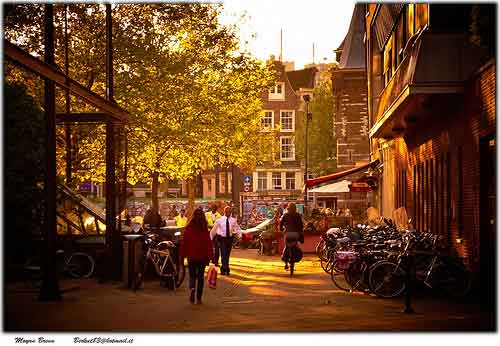
Still, that didn’t stop planners from ripping out cycle tracks and starting to design streets for cars as Europe modernized in the wake of World War II. By the early 1960s, much of the cycling infrastructure that had existed in the pre-war era was gone, and the percentage of the population using bicycles for transportation fell to an all-time low of 10 percent.
Then history intervened. “The energy crisis in 1973 hit Denmark hard. Very hard,” writes Colville-Andersen. “Car-free Sundays were introduced in order to save fuel. Every second streetlight was turned off in order to save energy. A groundswell of public discontent started to form. People wanted to be able to ride their bicycles again — safely. Protests took place…. The energy crisis faded, but then returned in 1979. More protests. One form of protest/awareness was painting white crosses on the asphalt where cyclists had been killed. This time, things happened. We started to rebuild our cycle track network in the early 1980s. Fatalities and injuries started falling. The network was expanded.
learn more about bikes in each city, and a video, at – The Atlantic Cities
// Photo – Moyan_brenn
Slate wants your pics of useless sidewalks, missing crosswalks, dangerous shoulders and anything else that makes you feel uncomfortable or unsafe walking.
The most interesting images will be featured on a gallery on Slate.
Deadline: May 1
How to Submit
- Email: send it to us at unwalkable@gmail.com.
- Flickr: Tag your photo #walkfail and upload to Flickr.
- Instagram: Tag your image #walkfail and upload to Instagram.
via Slate


