Heading NXNW…TO THE FUTURE

This week, 1X57 is heading North by Northwest to Vancouver for the World Future Society‘s annual conference, World Future 2011, to kick off a new phenomenon we’ve co-produced, Futurists:BetaLaunch – an innovation showcase slash tech petting zoo featuring 12 ideas in beta that offer an exciting vision of the future.

Although this is 1X57’s first time to World Future and we’re not really sure what to expect, we’re pretty stoked. Earlier in the year, we were invited as guests of the World Future Society to an exclusive reception and screening of the Ray Kurzweil documentary, Transcendent Man, with uber-futurist Ray Kurzweil himself and the Director/Producer Barry Ptolemy. Hearing Ray speak in person was tantamount to doing mental crack.  He didn’t talk about common DC hot topics like LIvingSocial or big data (not that these are inherently unexciting) but for me, they pale in comparison to contemplating the bigger picture of what life will be like once we can physically achieve immortality or once AI surpasses human intelligence. These are gnarly questions that like it or not, we as a race are moving towards having to answer.

In our adventure, we’re bringing some friends – Tech Cocktail and Disruptathon – who will be adding an additional layer of awesomeness to F:BL. Disruptathon will be providing the platforms and the technology to collect real-time feedback from World Future attendees about each BetaLauncher and Tech Cocktail will be hosting an evening reception that will feature the BetaLaunchers alongside 12 local Vancouver start-ups.

We’re also looking forward to meeting two special guests, Dale Dougherty and Brian Wong. Dale is the co-Founder of O’Reilly Media and editor and publisher of MAKE magazine and will be doing a fireside chat on the maker revolution as a lead-in to the evening Tech Cocktail event. And Vancouver’s own Brian Wong, touted the next Mark Zuckerberg and the youngest entrepreneur to receive VC funding (for his brainchild Kiip) will be joining us on Saturday evening at Tech Cocktail to check out the innovations and start-ups.

Then there’s the content of the conference itself. Steve and I will be joined by our friend, Kirby Plessas, to discuss living content and how open communication and content platforms are molding the future. And there are several talks we’re looking forward to attending, including the Sunday keynote by scientist and Biomedical gerontologist Aubrey de Gray on the Prospects for Defeating Aging.

With everything that will be going on, I think I’m most excited about being in an environment that contemplates the future and asks not can we get there, but how – because ultimately that is how the future is made.
Twitter’s edge is Big Data

Today Twitter announced that it purchased Backtype, a tiny company doing Big Data. The website says the company does “social media analytics” which is pretty much saying “Oprah sits on a couch.”

It’s the buzzy-est of buzz words, but if you dig into this you find that the company doing things that everybody wants. Like analyzing hits per link.

When a content creator shares their work the Backtype-created Storm product steps in. Giving you a realtime conversational graph, ability to search comments, and an influence score. Add to that comparison shopping through analysis of top sites and trending links.

But you may be asking, can’t I already do this?

Yes, you can, if you want it 24 hours later.

Stats on the web fall into two categories, instant low tech stats and delayed high tech stats. The market is saturated with the latter (delayed high tech stats) because the core innovations already exist. The reason is complicated but it boils down to the fact that today’s top hardware was built for the pre-Twitter/Facebook world.

To build for realtime processing requires a whole new set of operators where speed, size, and queries go supernova. To give you an example of this, see Backtype’s stats:

  • 100-200 machines (operating as one)
  • 100 million messages
  • 300 queries/second

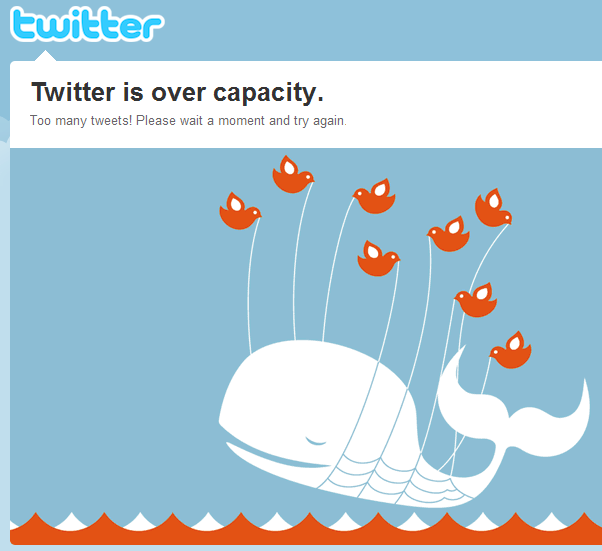
This is the world that Twitter lives in, millions of messages/second. If you remember the early days of Twitter with all the downtime and Fail Whale messages, that was due to the technological limitations of the time.

They proved that quick, short messages are beloved by us humans to the tune of billions. Since then they have been massively scaling, customizing, and driving the industry. Not only do they need a way to process billions of messages without Fail Whal-ing, but they need to offer (paid) services on top of it.

This is where Backtype comes in. The team built a fascinating service on top of Twitter that does stream processing, continuous computation, and distributed RPC (remote queries of 100s of machines).

The simple translation of this is “live analytics”. The complicated version, pulled from Twitter’s:

“Imagine you have a cluster of 100 computers. Hadoop’s distributed file system makes it so you can put data…in…and pretend that all the hard drives on your machines have coalesced into one gigantic drive….it breaks each file you give it into 64- or 128-MB chunks called blocks and sends them to different machines in the cluster, replicating each block three times along the way.

“…the second main component of Hadoop is its map-reduce framework, which provides a simple way to break analyses over large sets of data into small chunks which can be done in parallel across your 100 machines.”

By buying this technology Twitter is pushing it’s edge with Big Data.

An advantage they started building years ago to make sure the product stopped failing all the time. It has taken them years, millions, and transformed the company into a professionally respectable “Big Data operation”, that is world class and in many ways unique.

Now they have some freedom to play around and Backtype provides the playground. Links stats, emerging trends, and viral memes are just the beginning.

We are about to see how realtime we can get…

Twitter's edge is Big Data

Today Twitter announced that it purchased Backtype, a tiny company doing Big Data. The website says the company does “social media analytics” which is pretty much saying “Oprah sits on a couch.”

It’s the buzzy-est of buzz words, but if you dig into this you find that the company doing things that everybody wants. Like analyzing hits per link.

When a content creator shares their work the Backtype-created Storm product steps in. Giving you a realtime conversational graph, ability to search comments, and an influence score. Add to that comparison shopping through analysis of top sites and trending links.

But you may be asking, can’t I already do this?

Yes, you can, if you want it 24 hours later.

Stats on the web fall into two categories, instant low tech stats and delayed high tech stats. The market is saturated with the latter (delayed high tech stats) because the core innovations already exist. The reason is complicated but it boils down to the fact that today’s top hardware was built for the pre-Twitter/Facebook world.

To build for realtime processing requires a whole new set of operators where speed, size, and queries go supernova. To give you an example of this, see Backtype’s stats:

  • 100-200 machines (operating as one)
  • 100 million messages
  • 300 queries/second

This is the world that Twitter lives in, millions of messages/second. If you remember the early days of Twitter with all the downtime and Fail Whale messages, that was due to the technological limitations of the time.

They proved that quick, short messages are beloved by us humans to the tune of billions. Since then they have been massively scaling, customizing, and driving the industry. Not only do they need a way to process billions of messages without Fail Whal-ing, but they need to offer (paid) services on top of it.

This is where Backtype comes in. The team built a fascinating service on top of Twitter that does stream processing, continuous computation, and distributed RPC (remote queries of 100s of machines).

The simple translation of this is “live analytics”. The complicated version, pulled from Twitter’s:

“Imagine you have a cluster of 100 computers. Hadoop’s distributed file system makes it so you can put data…in…and pretend that all the hard drives on your machines have coalesced into one gigantic drive….it breaks each file you give it into 64- or 128-MB chunks called blocks and sends them to different machines in the cluster, replicating each block three times along the way.

“…the second main component of Hadoop is its map-reduce framework, which provides a simple way to break analyses over large sets of data into small chunks which can be done in parallel across your 100 machines.”

By buying this technology Twitter is pushing it’s edge with Big Data.

An advantage they started building years ago to make sure the product stopped failing all the time. It has taken them years, millions, and transformed the company into a professionally respectable “Big Data operation”, that is world class and in many ways unique.

Now they have some freedom to play around and Backtype provides the playground. Links stats, emerging trends, and viral memes are just the beginning.

We are about to see how realtime we can get…

The surfing pop up

I’m back at the beach. A barefoot drop-in to the doughnut shop for a ‘buttermilk chocolate’. Standing on a fence to spot the best break. Squeezing into a wetsuit like a cannonball through a garden hose. Finally, down to the water..

There’s only one problem, I don’t know how to stand-up.

Everyone thinks I’m a surfer and I sure tell them I am. But, it’s one thing to love the beach and own a surfboard. A whole different type of fish to stand up and ride a wave diagonal instead of straight towards the shore.

I practice when I’m in the water but my inner dork tugs at me. I must hit the internet and learn the mechanics of surfing. Is it a full body gesticulation or a precise pressure point? Are my legs and abdomen juicing the push or is it just my hands?

With the help of Google, I’ve narrowed it down to these precise movements:

  • Place palms on top of the board, do not grip the side.
  • Push your shoulders off the board but keep your thighs on the board, creating an arch in your back (in Yoga it’s upward dog)
  • Swing your knees to your chest.

That’s it.

Now, for some deeper tips.

  • When you stand on land you push your chest back to stand. This shifts your weight backwards and on water will cause you to tip over.  Instead keep your weight steady by pulling your feet underneath you.
  • Never use your knees. All the sites say this is the first and worst habit that every new surfer learns.
  • It is tempting to position your toes for better kung fu grip but resist. The motion needs to be a push up to a pendulum feet swing underneath.
  • You can let your back foot drag into place because the key is to get your front foot underneath you.

Cool, now I have my mechanics down and it’s time to make it happen.

Oh, and the term for this is called the “pop up”.

Sources: how to surf, surfing handbook, I just surf

We finally made it to California

I feel compelled to write this after Amy’s posts on being bicoastal and her dream of living the ideal life. I am part of this too…well, half of it.

I also want to live in both Washington, DC and Southern California. Each one is home to a lifelong love of surfing and politics.

In both places I have learned who I am as a man, what I love,  what I want to do, and how I want to do it. Now it’s just a matter of achieving it.

So here I sit, day two, of making it all happen. Amy and I are in Southern California after packing up our belongings into a Washington, DC storage unit. We have no rent due since we’re staying at my parents.

Which isn’t so bad since are close to the beach and surfing, they have plenty of room and wifi and it let’s us reconnect while looking for a place to live in LA. All in all, it makes the transition super easy.

More importantly, it frees us up to focus on exactly what we need to:

  • Working from home
  • Establishing solid and productive work habits
  • Bringing together the final parts of our social campaign business
  • Enjoying the whole process


Day Two: G+ Lets Everybody In

Yesterday, was pretty fun so make sure to read the original post: I’m in love with Google+.

Day 2

One of the first things you notice about Google Plus (as my friend Bill pointed out) is that it looks a lot like Facebook. It has the three column view with the news feed dominant in the center.

Of course, the liberties don’t stop there. Google also added in Chat Roulette with their Hangout feature. They stole the Aspects feature from Diaspora with Circles. And, they took a lot from Rockmelt, the social browser Facebook wants to buy, with chat integrated everywhere on Google.

Which brings them pretty close to the US Patent law for a new invention: a novel combination of things.

Let’s dig into some of those.

Founders Love

At 8pm yesterday the whole site went bonkers. The Development team was thanking everyone. Vic Gundotra, the team lead for the project, was jubilant and asking for feedback for new features.

Then they rushed out the invite feature and the site went from limited beta to a bumrush. The news feed was just bursting with comments and we did lose our early adopter “test the features” attitude and switched into “how does this work”, “check out my business portfolio”, and all that.

Yep, pretty much like a normal social network.

Of course, it was pretty cool that Google founders Larry Page and Sergey Brin got on the site and played with us.

Names: G+, Google+, Google Plus

I think the hotness is G+

Hangouts

All the cool kids were using the hangout feature. Where you join a group video chat with about 20 other people.

It’s a really cool feature that is all the rage right now because top Google Developers, tech journalists, and other web celebrities are hosting them.

Android over iPhone

The android app is killing it. The coolest feature has to be the auto-upload of photos. Turn it on and any new photo will instantly be in the cloud, private of course. Then you can choose how/when/where to share.

The iPhone is just a web app that takes forever to load. It does work well once loaded but really not a lot of Apple love here.

Filter the Noise

Now that everyone is joining the fray it’s important for Google to add in a feature to streamline the content. There is just way too much going on.

Turns out they already have that feature with Circles, but it’s tricky because Facebook doesn’t work like this (although they wish they did).

See social networks allow us to have 100s of friends and the burgeoning content that goes with it. The current solution to this is to either auto select news (Facebook) or sort all your friends into groups (Google).

From the beginning Google has this built-in with Circles. In order to “friend” someone you have to add them to a Circle. Then when you want to share content or consume content you choose which circle to do it in.

I tried it and it works well. My friends circle is pretty small with high quality content. The acquaintance circle is much bigger with sporadic good content. It’s pretty easy to switch between them and filter your news.

Join the Google Empire

You may have heard that Larry Page tied every Google executive’s bonus to getting Google “social”. One way they made that happen is to update the look of every Google Site.

This means that in Gmail you have a black bar across the top and on the right it shows your G+ notifications. All the other sites are similarly updated so no matter where you go in the Google empire your social network is no more than a click away.

Facebook Legwork

All the early adopters and geeks love G+ and, now comes the rest of the crowd. Which presents an interesting experiment since Facebook already introduced social networking to 700 million people.

They all know how to friend, like, comment, upload photos, change their profile, etc.

Perhaps G+ will have a much easier time getting users?

One thing is for sure, Google has the users and the content.

Facebook really has no answer to Google News/Finance/Calendar/Docs/Music/Video/Reader and not to mention the millions of searchers. It will be interesting to see how Facebook reacts to this…

I’m in love with Google+

Yesterday I logged into Google+ and immediately became lost. I spent about five minutes playing around and then left.

Today I came back and dropped an hour and a half playing with it.

Here is what I found, and why I love it:

Built-in Profile

Ok, I’m a blogger and I want Google to send us hits. This means I created a Google Profile with links, pictures, and a biography. With that instantly linked to Google+, I am saved the trouble of having to re-create a new personal profile.

Creating a new account on every freaking website is the slavery of the web. The same info, the same profile pic, hopefully the same password, multiplied across 1,000 sites.

Friends via Email

It is very likely that I have emailed anyone I will want to friend in a social network. With my profile auto-linked, my email contacts are auto-linked too. They are not yet my Google+ friends, but they are a quick drag-n-drop away.

It’s been super easy to get going.

But, on a side note, the whole circles thing in Google+ is still weird. I have over 1,800 friends in Facebook (part business, part personal) and sorting them into groups is a daunting task. Moving them into the Google+ circles means sorting out many 100s of affiliate friends. The circles feature is as easy as it gets but still involves 100s of actions by the user.

This is definitely something I expect/pray a data engineering company like Google to fix.

Privacy

I think Google learned their lesson with Buzz. As Gina Trapani puts it:

Don’t mess with the Gmail inbox. When Buzz invaded my Gmail inbox with a flood of social-networky conversations, my first instinct was “Turn it off!”

First step complete (don’t mess with successful products). Second step, make privacy easy. I think they have done that with circles, and despite my complaining above, it works really well. Every friend you add has to be sorted into a circle, then when you share information you have to specify which circles it goes out to (with “all” being an option).

It’s kinda amazing in its simplicity, but maybe that’s all it takes when privacy is truly “built-in”.

I guess we should also say that circles is an obvious steal from Diaspora, although they kinda deserve that since they called it the annoying “aspects”.

Mobile

You really can’t launch a social network without having mobile on day one. Google seems to have done that with all the positive buzz around their mobile site. It’s not an app but Google does have the best web apps of anyone on the market.

I haven’t tried this feature yet but will soon. Early thoughts on it are welcome.

Sparks

Lastly, Google+ has this feature called sparks. It’s an obvious rip-off of Facebook’s likes and interests features, but with an interesting twist.

When you perform a search on one of your “sparks” (mine being “surfing”) up pops the latest news from Google News. If one were in Facebook the results would be populated with random people named surfing, groups about surfing, and web content they have stolen/imported into Facebook. All part of Facebook’s plan to re-create the web inside their network so we never leave the site.

I see this difference as potentially providing Google with a big advantage over Facebook.

Think about how often you use the suite of Google tools (news, docs, finance, mail, calendar) and how incredibly useful they are for productivity, work, and research. If Google can continue to incorporate these tools into Google+ then they can overcome Facebook’s biggest problem: the social network is a huge waste of time.

That would so +1 Facebook.